


When’s the last time you had a conversation with your children about their inheritance?
For many families, inheritance planning is something that happens largely behind the scenes. Parents typically work with financial advisors and estate planning attorneys to decide how they eventually want their wealth distributed, and then structure their plans accordingly.
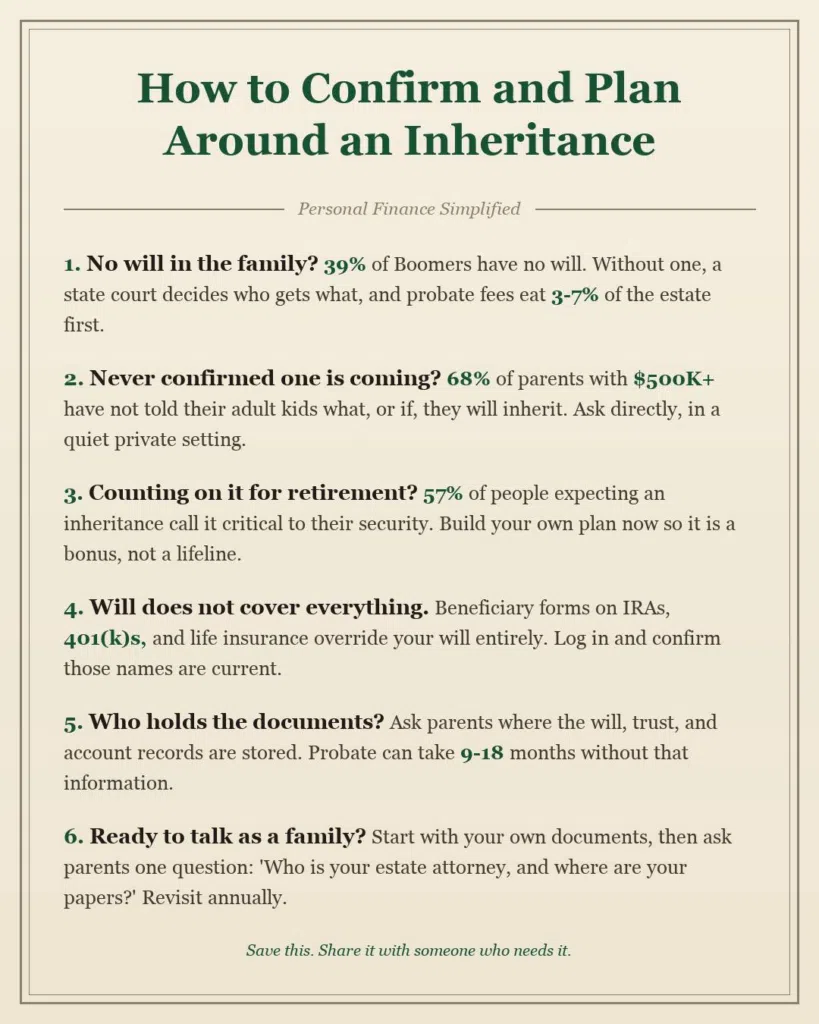
Meanwhile, the people who will one day receive those assets may know very little about what to expect or how they’ll be responsible for managing it.
Receiving an inheritance can quickly put someone in unfamiliar financial territory. Even an adult child who’s managed money responsibly for years may have little experience making decisions about a much larger pool of wealth.
Those decisions may also feel overwhelming during a period of grief, when looking at major financial choices can feel particularly difficult. Preparing your heirs ahead of time can give them a better understanding of what they may inherit and how to approach the decisions that come with it.
Why Managing Inherited Wealth Can Be More Complicated Than It Seems
Receiving an inheritance can change your child’s financial picture very quickly, often before there’s time to get oriented.
The size of the inheritance can introduce financial decisions they’ve never encountered before. An heir who’s spent years managing a household income and contributing to retirement accounts may suddenly be responsible for a much larger pool of wealth, with very different tax, investment, and estate planning considerations.
This can take an entirely different level of coordination than they’ve previously needed, all while grieving and processing a loss. That’s part of why inheritance planning can be so valuable before the transfer happens. Giving heirs some context ahead of time can help make the eventual transition feel less unfamiliar and give them a stronger foundation for the decisions that follow.
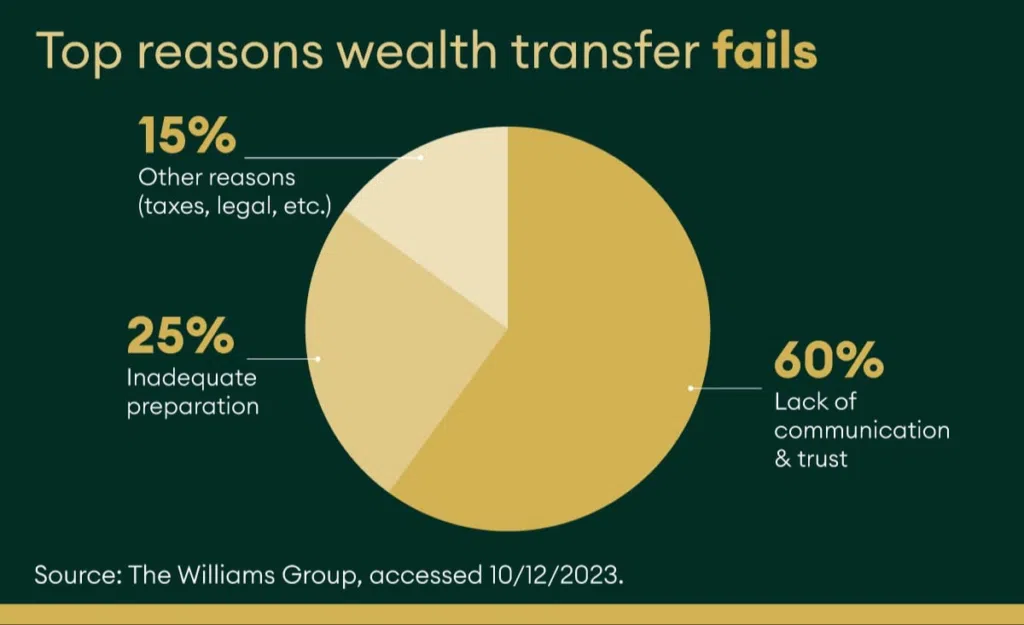
Without a broader plan for the inheritance, it’s also easy for individual financial decisions to add up and eat away at the funds.
A home purchase, gifts to family, increased spending, or other major commitments may each seem reasonable on their own, all while collectively changing how long the inherited wealth can support the heir’s goals.
Inheritance Planning Can Start Before an Inheritance Exists
Talking about an inheritance while everyone is healthy and the transfer may still be years away can feel uncomfortable. In fact, 34% of parents say discussing inheritance makes them uncomfortable, and more than half haven’t discussed their net worth with their children.
The thing is: those conversations don’t have to begin with a dollar amount. Parents can start by sharing how they think about money, how they built their wealth, and what they hope it will eventually allow their family to accomplish. Over time, those more open discussions can expand to include the decisions heirs may eventually be involved in and the people who currently help the family manage its financial affairs.
How much you share will depend on your family. Some parents may be comfortable discussing specific assets or expected inheritance amounts, while others may prefer to begin with the broader intentions behind their estate plan.
There can also be a disconnect between how much information parents want to share and how much their children want to receive. More than half of adult children surveyed said they want to know how much they’ll inherit, while 35% of parents said they don’t want their children to know.
The conversation itself can be an incredibly important part of wealth transfer planning. Starting earlier gives families more time to discuss expectations and answer questions while the people who built the wealth are still there to provide the context behind their decisions.
Preparing your family for an eventual inheritance is one part of a much larger wealth transfer conversation. You can learn more about the wealth transfer that’s already underway in our article, The Great Wealth Transfer: How to Prepare for the $84 Trillion Intergenerational Shift.
Give Your Heirs an Opportunity to Learn Before They Inherit
The first time an heir meets the professionals who helped manage their family’s wealth shouldn’t be immediately after losing a loved one. Inheritance planning can give the next generation time to become familiar with the people, decisions, and responsibilities they may eventually inherit along with the assets themselves.
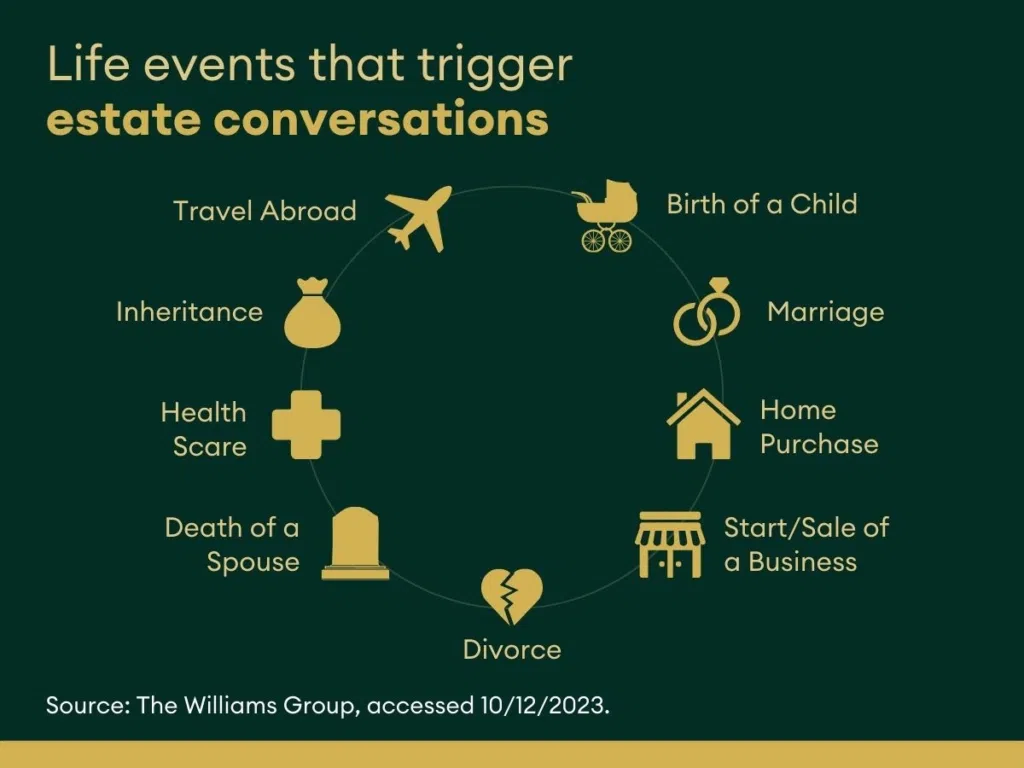
Depending on your family, that may include:
- Introducing adult children to your financial advisor and other key professionals.
- Explaining the purpose behind certain trusts or other estate planning decisions.
- Including heirs in appropriate conversations about charitable giving or family priorities.
- Talking through how major financial decisions are typically made.
- Encouraging adult children to build financial plans of their own.
- Making sure the right people know where important documents and contact information are kept.
The preparation for transferring your wealth doesn’t (or shouldn’t) have to happen all at once. The eventual transition can feel much less abrupt if you give heirs opportunities to ask questions and understand how your family approaches those financial decisions.
Should You Use a Trust to Manage How an Inheritance Is Received?
Preparing your heirs for what’s next is one part of inheritance planning, but families can also take this time to consider how and when the assets themselves will be transferred.
Depending on how a trust is structured, inherited assets may be distributed over time rather than passing directly to a beneficiary all at once. A trustee can also be appointed to manage the assets and carry out the terms established in the trust.
There are many reasons a family may choose this approach. For some, it could help to provide additional structure around a significant inheritance. Trusts can also play a role in tax and estate planning, asset protection, or other family considerations.
The best option for you will depend on your family, the assets involved, and what you hope to accomplish. An estate planning attorney can help determine which legal arrangements are appropriate and draft the necessary documents, while your financial advisor can help you consider how those decisions fit within your broader wealth transfer plan.
What Should You Do After Receiving an Inheritance?
If you’re reading this as the person who has received inherited money from your parents or another loved one, start by understanding exactly what you’ve received. An inheritance can take many forms, and each may come with different financial and tax considerations.
For example:
- Cash may give you more immediate flexibility, but you’ll still need to decide how it fits into your existing savings, investments, spending, and longer-term goals.
- Investment accounts may have tax considerations that affect whether and when you decide to sell inherited investments.
- Retirement accounts can come with specific distribution requirements and tax rules that may require attention relatively quickly.
- Real estate may leave you deciding whether to keep or sell the property, especially when ownership is shared among multiple heirs.
- Business interests can come with questions about ownership, valuation, succession, and whether you want to stay involved in the business at all.
Once you understand what you’ve inherited, you can begin looking at the inheritance within the context of your own financial life. Receiving inherited money from your parents could affect the decisions you were already making.

The timeline for making these decisions can vary depending on what was inherited. Some assets may come with distribution requirements or tax considerations that need attention relatively quickly, while others may allow more time to think through your options.
A financial advisor, CPA, and estate planning attorney can help you understand how the different pieces of an inheritance work together and where specialized guidance may be needed.
Thinking through your own estate and inheritance planning? Towerpoint Wealth’s The 411 on Estate Planning walks through several of the decisions families may want to consider as they prepare for the future.
Bringing the Next Generation Into Wealth Transfer Planning
From the parent’s perspective, understanding what heirs may eventually face can affect how prepared the next generation is. Bringing adult children into the relationship with your financial advisor and introducing them to the other professionals involved in your estate can give them familiar people to turn to when questions come up later.
At Towerpoint Wealth, we help you incorporate the next generation into the wealth transfer planning process at a pace that makes sense for you. That may include:
- Facilitating family conversations around wealth and/or inheritance.
- Reviewing beneficiary designations.
- Coordinating with estate planning attorneys and tax professionals.
- Thinking about how estate planning decisions fit within your financial plan.
Giving heirs access to those conversations and relationships can help prepare them for the responsibilities they may eventually inherit.
The Bottom Line
You’ve spent years making decisions about your wealth; your children may be asked to take responsibility for it in a much shorter period of time.
Giving them some familiarity with those decisions before they receive an inheritance can make a meaningful difference in the longer-term. Maybe that starts with a conversation about what you hope your wealth will accomplish, and gradually grows into introductions to the people who have helped you manage it and a better understanding of the plans you already have in place.
Every family will decide how much to share and when; the important part is creating opportunities for the next generation to ask questions and learn while you’re still there to provide the context behind the decisions you’ve made.
An inheritance can transfer assets. Years of conversations can transfer something equally valuable: an understanding of how and why that wealth was managed in the first place.
If you’re thinking about how to prepare your family for an eventual wealth transfer, or you’ve recently inherited money and want help evaluating what comes next, we invite you to schedule a complimentary 20-minute Ask Anything Conversation with a member of the Towerpoint Wealth team.