


We’ve been hearing some version of the same question from clients lately: The market is at an all-time high. Should I be doing anything differently?
Seeing the stock market at an all-time high can bring mixed reactions. If you’re already invested, you may be wondering whether it’s time to take some of those gains off the table. If you have cash waiting to be invested, putting it to work after the market has already climbed can feel like buying right at the wrong time.
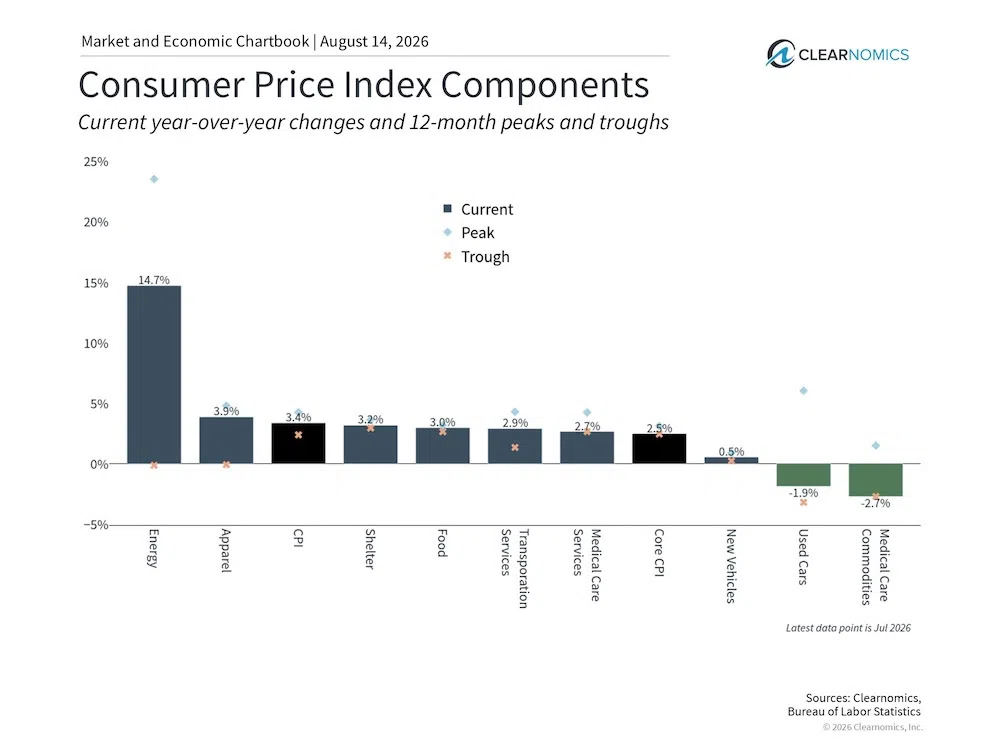
The current environment adds to the hesitation that many investors are feeling. Every day they’re being flooded with headlines about inflation, consumer debt, geopolitical uncertainty, and elevated valuations in parts of the market, all while major market indices continue reaching new highs.
It can feel like those two stories shouldn’t be happening at the same time; however, markets have never required a perfect economic backdrop to move higher.
So, what does an all-time high actually tell us about where the market goes from here? We believe that understanding what that milestone represents can help put today’s record levels into better perspective.
Why Are Markets Reaching All-Time Highs?
While much of the attention has been on the risks facing investors, there have also been some meaningful tailwinds supporting markets.
Corporate earnings have been particularly strong, with second-quarter results broadly exceeding expectations. Businesses have continued growing profits even as they’ve navigated higher costs, changing interest rate expectations, and geopolitical developments.
Interest rate expectations have adjusted throughout the year as investors digest each new inflation report and labor market update. Because markets are forward-looking, those changing expectations can affect prices well before the Federal Reserve announces its next decision.
Technology and artificial intelligence have also continued to contribute to market gains, but this story has extended beyond the largest technology companies. Other areas of the market, including energy and industrials, have also helped support performance.
Taken together, those developments help explain the strength we’ve seen in the market. At the same time, elevated valuations and an uncertain economic backdrop leave plenty for investors to keep an eye on.
All of those things can be true while markets are reaching new highs. A strong market doesn’t require every economic indicator or headline to point in the same direction. Corporate earnings and expectations for future growth contribute to the prices we see today.
What Happens After the Stock Market Reaches an All-Time High?
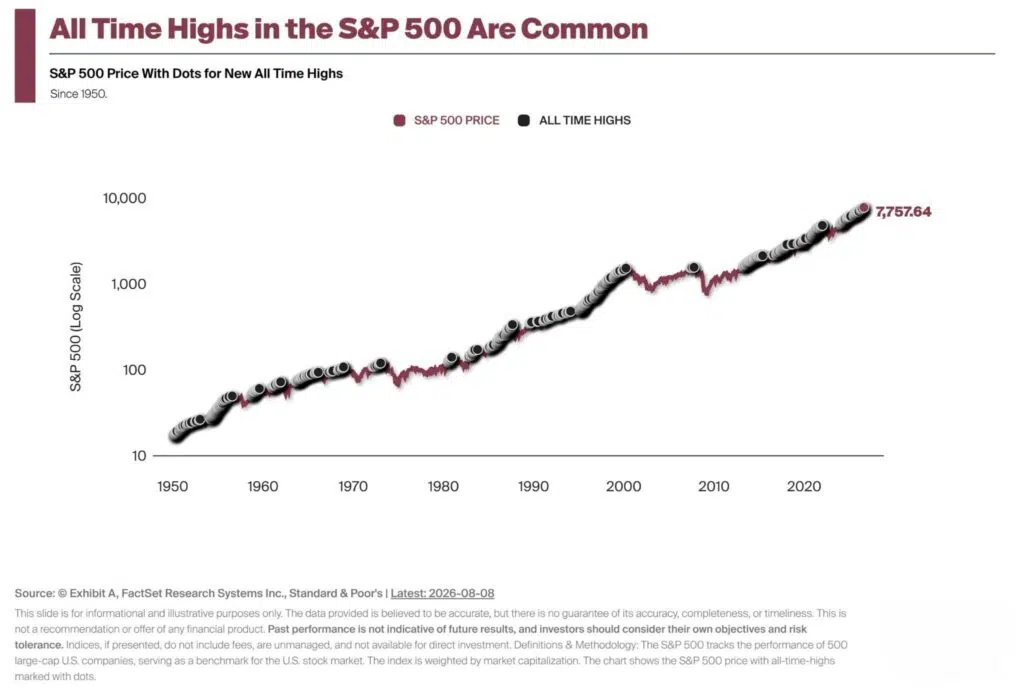
The phrase “all-time high” can make it sound as though the market has reached some kind of ceiling. Historically, that isn’t how markets have worked.
If the stock market grows over time, it has to set new records along the way. One all-time high can be followed by another, sometimes within days or weeks, which is why reaching a record tells us much more about where the market has been than where it may go next.
Of course, new highs can be followed by periods of volatility or market declines, but they can also be followed by additional gains and another series of record highs. Investors have experienced both throughout market history.
That uncertainty can feel especially relevant when deciding what to do with your own portfolio. A market high may make stocks feel expensive or make waiting for a pullback seem appealing. The challenge, however, is that we don’t know whether that pullback will happen next month, next year, or after markets have moved considerably higher.
And that’s why trying to time your next move around an all-time high can be more difficult than it sounds.
What If You’re Waiting for the Market to Pull Back?
When markets are setting new records, waiting for a pullback can feel like the more cautious choice. Why invest today if there may be an opportunity to buy at a lower price later?
The challenge is knowing what that opportunity is supposed to look like. Are you waiting for the market to fall 5%? Or 10%? And if it gets there, will you feel comfortable investing, or will the news that caused the decline give you a reason to wait a little longer?

There’s also no guarantee that a future pullback will take the market below where it is today. Markets could continue climbing before the next correction arrives, leaving investors with a “lower” entry point that is still higher than the one they were hesitant to take.
This is one of the difficulties we see with trying to wait for a more comfortable time to invest. When markets are rising, prices can feel too high. When they’re falling, the reasons behind the decline can make buying feel even more difficult.
For investors with money intended for longer-term goals, trying to find the perfect entry point can leave that money sitting on the sidelines while the market continues to move.
What Should You Actually Do When Markets Are at Record Highs?
There is no one “right” answer for every investor when markets reach a new high. Where you are in your financial life and when you expect to need the money can all affect what makes sense for you.
If You’re Already Invested
A new market high can be a useful time to look at how strong performance has affected your portfolio. If stocks have appreciated significantly, they may now represent a larger share of your investments than you originally intended. The same can happen with an individual company or sector that has performed particularly well.
Rebalancing can bring the portfolio back toward its intended allocation and risk level. Whether that makes sense will depend on the portfolio itself, along with potential tax consequences and the role those investments play in your broader financial plan.
If You Have Cash Waiting to Be Invested
If you have money intended for longer-term investing, the market reaching a record high may understandably make you hesitant to put it to work all at once.
Your time horizon, liquidity needs, and comfort with market fluctuations can help determine how you approach that decision. Some investors may choose to invest a lump sum, while others may prefer to put money into the market gradually over a defined period.
Either approach should have a plan behind it. Leaving cash on the sidelines indefinitely while waiting for a more attractive market level brings us right back to the same challenge: no one knows when that opportunity will arrive or what the market will do in the meantime.
If You’re Approaching or Already in Retirement
For someone who expects to begin drawing from a portfolio soon, an all-time high may prompt a unique conversation.
This can be a good opportunity to review how upcoming spending will be funded, how much is held in stocks versus more conservative investments, and whether recent market gains have changed the portfolio’s overall risk. Investors already taking withdrawals may also want to consider how much cash they have available for near-term expenses.
The same all-time high can look very different depending on the investor. If you’re an investor worried about how current market conditions can affect your portfolio, reach out to see how a Towerpoint Wealth advisor can help you decide if (or how) your investment strategy should be adjusted.
A Record High Can Be a Reason to Review, Rather Than React
When markets reach new highs, it can be tempting to assume that something needs to change. A better use of that moment may be to review whether your portfolio still reflects the plan you intended to follow.
That review may include thinking about:
- Whether your current allocation still reflects your target mix.
- Whether strong performance has created an outsized position in one company or sector.
- Whether upcoming withdrawals or your liquidity needs have changed.
- Whether potential portfolio changes would create meaningful tax consequences.
- Whether your goals, time horizon, or financial circumstances have evolved.
At Towerpoint Wealth, we believe significant portfolio changes should have a reason behind them. If something in your financial life has changed, there may be a case for adjusting the strategy. A new record for the S&P 500, by itself, tells you far less about what your portfolio needs.
Market Highs Don’t Eliminate Economic Risks
The market reaching new highs doesn’t make the other concerns investors are hearing about disappear.
Inflation remains elevated in some areas, interest rate expectations continue to evolve, and geopolitical developments can quickly change the market’s outlook. At the same time, some households are feeling pressure from higher costs or growing debt burdens.
These are all developments we continue to watch. Markets are forward-looking, though, and prices reflect what investors collectively expect those developments could mean for corporate earnings and the economy.
For investors, keeping those headlines in context can be especially useful when they seem at odds with what markets are doing.
Want a look at what we see shaping markets right now? Read our Mid-Year Market Outlook for our perspective on inflation, interest rates, consumer spending, corporate earnings, and what we’re watching during the second half of 2026.
Final Thoughts
Seeing the market at a record high can make it feel like you should be doing something differently, but history gives us plenty of examples of new highs followed by additional gains, as well as periods when volatility or declines eventually followed. There’s no reliable way to know which comes next.
What you can see is whether your portfolio still reflects where you are today. Your goals, time horizon, spending needs, risk tolerance, and overall financial plan all provide more useful context than just how the market is performing.
If those things haven’t changed, a new record for the market may not require a change from you either. If they have, that may be a reason to revisit the strategy and make adjustments based on your financial life.
If recent market gains have you wondering whether your portfolio still fits your goals, we invite you to schedule a complimentary 20-minute “Ask Anything” Conversation with a member of the Towerpoint Wealth team. We can use this time to see how we may help you look at what has changed, what hasn’t, and whether any adjustments make sense within the context of your broader financial plan.