
Most investors spend decades with a narrow focus on one question: “How much money do I need to retire?”
And, for many decades, this framing tends to serve investors well. Markets rise and fall, so, over long periods of time, average returns often dominate the conversation. During working years, consistency and patience often matter more than shorter-term fluctuations.
But as retirement approaches, the focus naturally changes.
Once a portfolio begins providing you with income, instead of solely receiving your contributions, averages alone stop telling the full story. Two investors can experience nearly identical longer-term market returns and still have very different outcomes, depending on when those returns occur.
That difference highlights what’s known as the sequence of return risk.

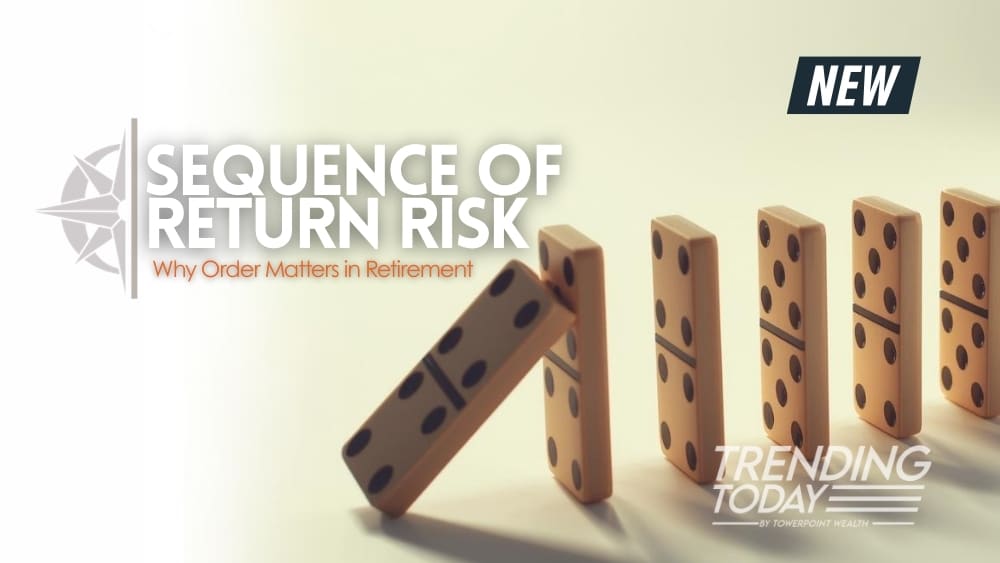
In simple terms, a sequence of returns describes how the order of market gains and losses affects a retirement portfolio once withdrawals begin. Losses early in retirement can carry a disproportionate impact, even when markets recover later.
This isn’t a prediction about downturns, or an argument for avoiding risk altogether; market volatility has always been part of investing. The challenge is understanding how volatility interacts with withdrawal strategies — particularly during the early years of retirement, when portfolios tend to be most sensitive.
During market downturns, many investors ask how market losses affect retirement income. The answer often comes down to timing. In retirement, as your window for recovery shrinks, the sequence of returns can matter more than the return itself.
What Is a Sequence of Returns?
Sequence of returns refers to the order in which market gains and losses occur over time, and that order can influence retirement outcomes once withdrawals begin.
Let’s consider two retirees with similar portfolios who experience the same average market return over a 10-year period: One has several strong years early, followed by weaker markets later. The other experiences market losses shortly after retiring, with recovery coming in later years.
Over the full decade, their average returns may look nearly identical. Yet their portfolio balances — and the income those portfolios can sustain — may not be.During working years, the order of returns tends to matter less than averages. Contributions continue (which are especially beneficial during temporary market declines), time usually allows markets to recover, and volatility is often absorbed along the way.
Once retirement begins, the dynamic looks different: withdrawals reduce the portfolio each year. If those withdrawals occur during a period of market decline, the remaining balance has less capital available to participate in a recovery.
That interaction between withdrawals and market timing is what makes the sequence of returns an important consideration in retirement planning.
So why do the first years of retirement tend to carry more weight than those that follow?
Why the First Years of Retirement Matter Most
The early years of retirement tend to carry more financial weight than many investors expect.

During accumulation, market declines are typically met with continued contributions and time for recovery. In retirement, that’s no longer the case. At this stage, portfolios are no longer receiving new capital and instead begin supporting spending needs through ongoing withdrawals.
When market losses occur alongside withdrawals, the impact compounds. Income still needs to be generated, even when portfolio values temporarily decline. That can mean selling assets at lower prices, leaving fewer dollars invested when markets eventually recover.
This is where the sequence of return risk becomes most apparent.
Markets have historically recovered from downturns. The question is not whether recovery happens, but whether a portfolio is positioned to fully participate when it does. Early losses can shorten that runway if withdrawals reduce the portfolio base available for future growth.
Many retirees begin asking how long retirement savings will last during periods of volatility. The answer often depends less on average market performance and more on how income is sourced during challenging stretches. Put differently, how can a retiree avoid selling low during a temporary market decline when generating monthly income?
That’s why having a retirement withdrawal strategy matters just as much as the investment selection itself. A thoughtful withdrawal strategy in retirement considers how income is generated across different market environments, helping preserve flexibility when conditions are less predictable.
Because when withdrawals, market timing, and spending needs all collaborate, small decisions made early can shape outcomes many years later.
How Market Losses Affect Retirement Income
Market volatility doesn’t carry the same consequences at every stage of life. During retirement, the interaction between market performance and income withdrawals becomes more visible — and more consequential — because portfolios are no longer being replenished through ongoing contributions.
When declines occur early in retirement, three dynamics tend to shape portfolio outcomes.
A Smaller Starting Point for Recovery
Market losses early in retirement reduce the value of the portfolio supporting future withdrawals. Even when markets rebound, recovery occurs from a lower base. Over time, that difference can compound, particularly when income is being taken consistently, as is typically the case in retirement.
Withdrawals Represent a Larger Share of the Portfolio
During downturns, the same dollar withdrawal may represent a larger percentage of remaining assets. That dynamic can accelerate portfolio depletion if it persists for extended periods, especially when combined with ongoing spending needs.
Behavioral Pressure During Uncertainty
Volatility can also introduce emotional pressure. Watching balances decline while continuing withdrawals can make otherwise disciplined investors question their well-thought-out longer-term decisions. Adjustments made during stressful moments — even when grounded in logic — may unintentionally disrupt a carefully designed plan.
None of this suggests that market volatility should be avoided or feared. It’s part of being a prudent longer-term investor. Market movements have always been part of investing, and recoveries are a normal part of longer-term cycles.
The more productive question, perhaps, is how retirement income is structured, so that temporary declines don’t force permanent decisions. Managing sequence risk isn’t about avoiding markets that are doing what markets do; it’s about structuring income thoughtfully so that you’re ready when they do.
The Role of a Grounded Retirement Withdrawal Strategy
Understanding sequence of return risk often leads investors to overly focus on markets or reevaluate their investment selections. In reality, the structure of income withdrawals can play an equally important role in shaping outcomes.
A thoughtful retirement withdrawal strategy considers not only how assets are invested, but how income is sourced over time.
Retirement rarely relies on a single account or a single stream of cash flow. Instead, income may come from a combination of portfolio withdrawals, retirement accounts, Social Security benefits, interest and dividend payments, real estate income, or other resources — each arriving on a different timeline and carrying different implications.
When these sources are coordinated intentionally, portfolios are often better positioned to absorb periods of volatility without forcing unnecessary changes. Flexibility around where income comes from, and when it’s taken, can help reduce pressure during market downturns while maintaining alignment with longer-term goals.
Overall portfolio positioning also deserves its spot in the conversation. In this stage, investments should no longer be viewed only through the lens of growth potential, but also through how they support ongoing cash flow needs as circumstances evolve.
A thoughtful withdrawal strategy in retirement, for this reason and many more, is less about predicting markets and more about creating structure — one that allows income decisions to adapt without disrupting the broader plan.
Diversified Income Streams and Timing Risk
Sequence of return risk is often described in the context of a single investment portfolio. In reality, many retirees draw income from multiple sources, which can materially shape how timing risk unfolds when the wind-down period begins.
Retirement income may include:
- Portfolio withdrawals
- Social Security benefits
- Interest and dividend payments
- Real estate income
- Business distributions
- Trust income
- Pensions or deferred compensation
When income is diversified across different streams, market volatility doesn’t affect every dollar equally. Some sources may be fixed. Others may fluctuate. Some may be discretionary in timing, while others follow a set schedule.
While it contributes to overall risk, layering also introduces flexibility.

For example, if a portion of income is less sensitive to market performance, it can reduce the pressure to draw from investment accounts during downturns. In that same manner, if certain withdrawals can be adjusted temporarily without disrupting longer-term goals, that flexibility can help preserve portfolio resilience during more volatile stretches.
Diversification is not only about asset allocation; it is also about how your income is structured.
The interaction between income sources — and how they are coordinated — often plays a meaningful role in how sequence of return risk can ultimately affect longer-term outcomes.
How Timing Risk Changes, and How Thoughtful Planning Responds
The sequence of return risk tends to receive the most attention at the beginning of retirement, but its influence doesn’t remain constant. As portfolios evolve and spending patterns change, the nature of timing risk changes as well.
When Timing Matters Most
Different phases of retirement introduce different timing sensitivities:
- Early retirement (the first 5–10 years): Portfolios are often most exposed to market timing during this period. Withdrawals begin just as balances are expected to support decades of income, which can amplify the impact of early losses.
- Mid-retirement: As markets recover, income sources diversify, or spending stabilizes, portfolios may become less sensitive to that shorter-term volatility.
- Later retirement years: Longevity considerations, healthcare costs, and evolving spending needs tend to play a larger role than market sequencing alone.
Sequence risk, in other words, is transitional rather than permanent. Understanding where your household sits within that timeline helps shape how income decisions are evaluated.
How Thoughtful Planning Can Support
Because outcomes can vary widely depending on market conditions and your unique situation, thoughtful planning focuses on preparing for multiple possibilities.
At Towerpoint, that typically means:
- Stress-testing portfolios across a range of market environments.
- Modeling different return paths, rather than relying on averages alone.
- Aligning withdrawals with how assets are structured and intended to be used.
- Designing flexibility into income decisions as needs evolve.
- Coordinating investment strategy with broader income planning conversations.
While we cannot eliminate uncertainty — markets have never offered that — we work with you to build resilience so that changing conditions don’t require reactive decisions.
Ultimately, timing risk changes how investors think about averages. Longer-term returns still matter, but how those returns arrive along the way can shape the retirement experience just as much.
Timing Matters, So Does Structure
Sequence of return risk, while crucial to plan for, doesn’t change the longer-term nature of markets. Periods of growth and decline will always be part of investing. What it changes is how those movements interact with income once retirement begins.
In retirement, investing is no longer centered on accumulation alone. It becomes a conversation about sustainability — about how assets are positioned to support spending over decades, not just how they perform in any single year.
Average returns still matter. But durability is shaped by structure, like:
- How income is sourced.
- How withdrawals are coordinated.
- How flexibility is preserved when markets don’t cooperate.
Thoughtful planning helps to absorb variability. It acknowledges that timing cannot be controlled, but structure can be intentionally designed.
If you’d like to review how your retirement withdrawal strategy is positioned across different market environments, we invite you to schedule a complimentary 20-minute “Ask Anything” conversation with our team. It’s our first step to helping you step back, evaluate how income decisions fit into your broader financial picture, and ensure your plan is built to endure, not just perform.