


Open an investment account and you’ll see plenty of numbers competing for your attention: share prices, daily gains and losses, percentage changes, account values. With all of that information updating constantly, it can be easy to think about a stock as a price on a screen.
At Towerpoint Wealth, we think about what we actually own behind the stock: a piece of a business. That business has customers to serve, employees to pay, products to build or services to deliver, debt to manage, and opportunities to invest in.
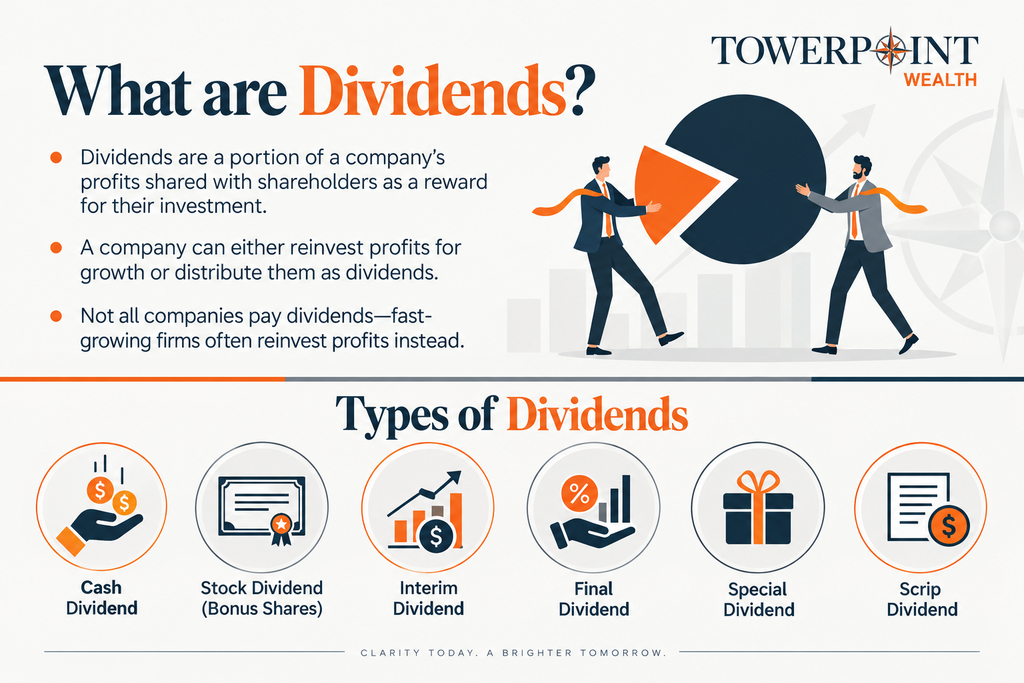
If the business is successful, it generates profits. Then management has to decide what to do with the cash the company has earned. It can either reinvest in the business, pursue an acquisition, pay down debt, repurchase shares, or return some of that cash directly to shareholders through a dividend.
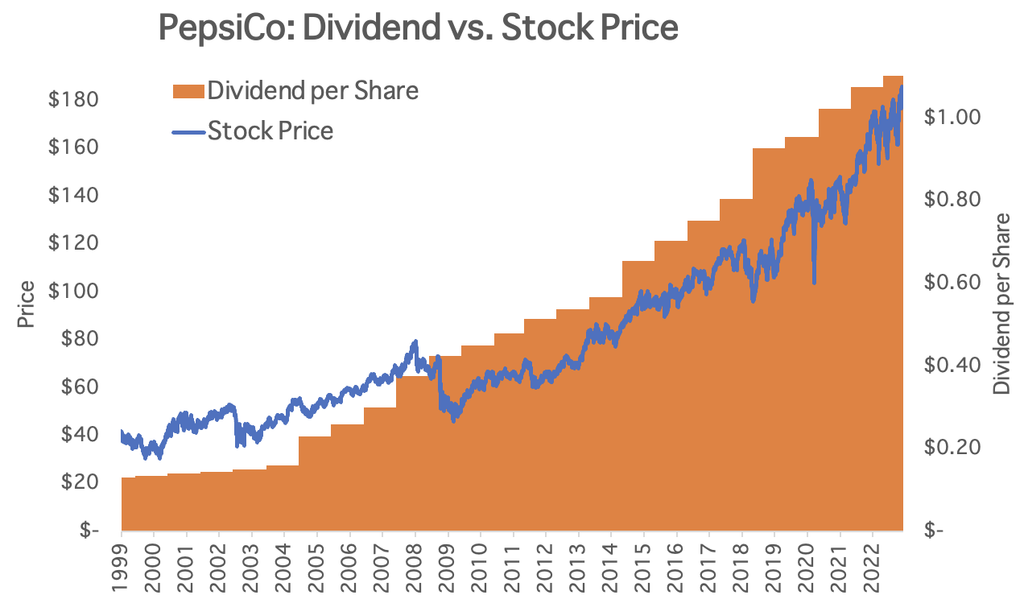
And when a company has been able to grow its dividend consistently over many years, there’s a lot we can learn by looking at how it got there.
In this briefing, we’ll follow that dividend from the business that generates it to the role it can eventually play in your portfolio. Along the way, we’ll look at what sustained dividend growth can tell you about the company and how those payments can build on themselves over time.
Follow the Dividend Back to the Business
Every dividend has to be funded by the business that pays it.
A company earns revenue by selling its products or services. It uses that revenue to run the business, pay its employees, service its debt, and invest in future growth. If the company generates cash beyond those needs, management has options for what to do with it, including reinvesting it back into the business or returning some of it to shareholders.
A rising share price is certainly nice to see, but there’s a business underneath that price. Understanding how that business creates value gives investors a much better sense of what they actually own.
For a company that pays a dividend, we can look at whether the earnings and cash flow of the business can support that payment. If the dividend has increased consistently over many years, we also want to understand what’s allowed the company to keep sending more cash back to its shareholders:
- Is the business generating cash and profits consistently?
- Does it have the financial strength to continue investing in its operations while paying shareholders?
- Is it still competing effectively in its industry?
- How much of its cash and profits does it need to retain to support the business going forward?
Those questions take us much deeper than the dividend payment itself, because they help us understand the business producing it and whether the economics behind that business have supported a growing stream of cash to shareholders over time.
Every Dollar of Profit Has Somewhere to Go
Paying a dividend commits part of a company’s cash to shareholders, which can change what decisions management has to make with what remains.
A new acquisition or other investment still has to justify the capital behind it. In that sense, a growing dividend can create a constraint, which can be helpful. Having cash available doesn’t automatically make an acquisition or new project a good use of it, and returning some of that cash to shareholders leaves management with less excess capital to deploy simply because it can.
That isn’t to say retaining profits is a bad thing. Some businesses have created tremendous value by reinvesting heavily in themselves. If management can put a dollar back into the company and create significantly more value from it over time, shareholders may be well served by keeping that capital in the business.
Ultimately, we want to see how well management has used the company’s cash over time. A growing dividend can tell us something about that discipline, while the company’s record for capital allocation shows us what management has done with the dollars it kept.
Want to see how we put these investment principles into practice? You can find our Wealth Management Philosophy here to learn more about our approach to investment selection and portfolio management.
The Compounding Effect of Reinvested Dividends
A company decides how much cash to return to shareholders. The investor then has another decision to make: what to do with it.
For an investor who’s still building a portfolio, dividends can be reinvested to purchase additional shares. Those shares can generate dividends of their own, which can then be reinvested again. If the company also increases its dividend per share over time, the investor may eventually own more shares, with each share producing a larger dividend than it did years earlier.
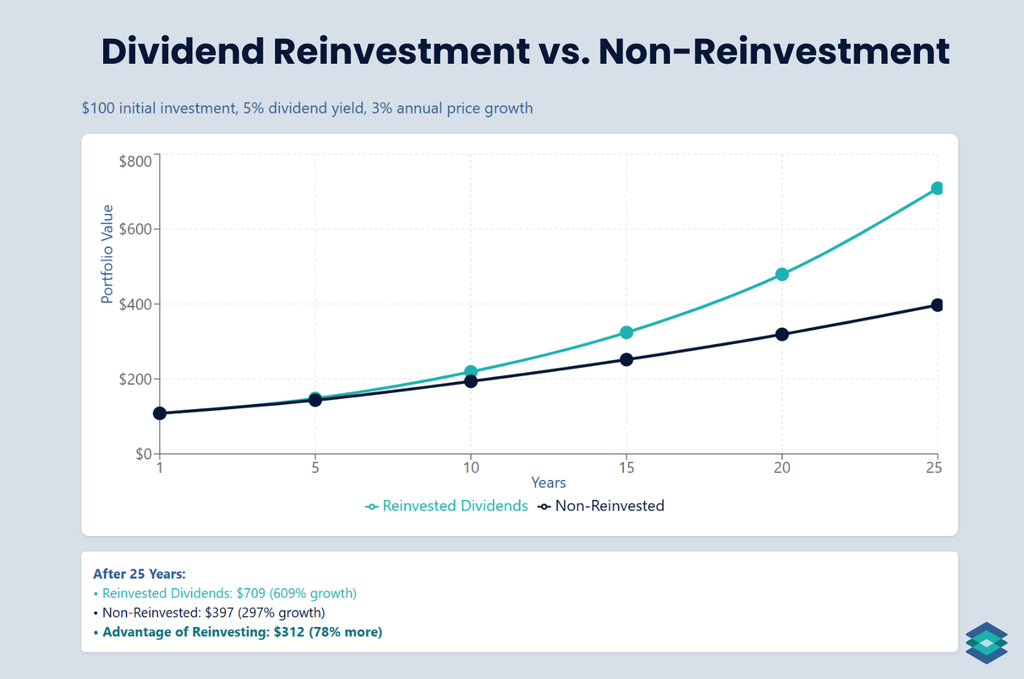
Time is doing a lot of the work in that process. Reinvesting a few dividend payments may not look particularly significant from one quarter to the next. Give those additional shares years to accumulate, however, and each round of reinvestment has the opportunity to build on the ones before it.
Market declines add an interesting caveat here. When the share price falls, the same amount of dividend income can purchase more shares. For someone still accumulating and reinvesting, volatility can therefore increase the number of shares added to the portfolio along the way.
That’s one reason dividend growth can be a helpful tool long before retirement. An investor in their 30s, 40s or 50s may be reinvesting those payments today with the expectation that years of additional shares and potentially growing dividends will contribute to the portfolio they eventually rely on.
We’ve written before about why time in the market can be such a powerful advantage for long-term investors. The same principle is at work here: reinvestment has more opportunity to compound when it has more time to work.
How Dividends Can Fit Into a Retirement Income Plan
If you’ve spent decades building wealth, you may have automatically reinvested your dividends along the way, using each payment to purchase more shares and continue building your portfolio.
Retirement can change what happens to that cash; instead of reinvesting every dividend, you may begin taking some of those payments to help fund your lifestyle.
We urge investors to remember, however, that dividends are usually just one piece of a retiree’s income plan. Social Security or a pension may cover some expenses, while interest and dividends can provide additional cash flow. Other spending may come from cash reserves or strategic sales from the portfolio.
Deciding where to pull the next dollar from requires looking across all of those sources together.
Taxes can make one account more attractive to draw from than another in a given year, while keeping sufficient cash available can reduce the need to sell investments during a market decline. And for someone taking withdrawals early in retirement, the order and timing of market returns can have an outsized effect on how long a portfolio lasts.
Your portfolio itself may also need to evolve as you move from accumulating wealth to funding retirement. Dividends can contribute to the cash flow it produces, alongside the portfolio’s broader mix of investments.
After years of putting investment income back into the portfolio, retirement introduces the challenge of deciding how, and when, to take that money out.
A Dividend Doesn’t Build a Portfolio
Just because a company has an impressive history of growing its dividend doesn’t mean it belongs in every investor’s portfolio. Before adding it, you should look at what you already own and what that investment would change.
For example:
- Would it increase your exposure to a sector you already own heavily?
- Would it create more concentration in a single company or industry?
- How would it affect your overall mix of stocks and bonds?
- Does the risk fit your time horizon and the role this money needs to play in your plan?
- Which account would you hold it in, and what tax consequences could come with that?
Dividend-paying companies aren’t exactly spread evenly across the market. If many of your holdings come from the same few sectors, you could have more concentration in your portfolio than the number of stocks you own would suggest.
You may also already own plenty of dividend-growing businesses through individual stocks, mutual funds, or ETFs. Learning more about dividend growth may simply help you better understand what’s already in your portfolio instead of giving you a reason to make a drastic change.
Dividend growth is one characteristic to understand within a much larger portfolio decision. The real work is figuring out how that investment fits with everything else you own and the role your portfolio needs to play in your financial plan.
The Bottom Line
Behind every stock is a business trying to create value. Behind every dividend is a decision about what that business will do with the cash it generates.
A long history of dividend growth can give investors a useful look at both sides of that equation: whether the company has been able to generate enough cash to support rising payments, and how management has chosen to allocate that cash over time.
For an investor who may still be accumulating, reinvesting those dividends can purchase additional shares and contribute to longer-term compounding. Later, those same payments may become one source of cash flow in retirement.
That’s why dividend growth is best viewed in context. Investors still need to understand what they own, why they own it, and how each investment fits with the rest of the financial picture and the income they may eventually need from it.
If you’re wondering how the investments you own fit with your retirement income needs, tax strategy, and longer-term financial plan, schedule a complimentary 20-minute Ask Anything Conversation with a Towerpoint Wealth advisor.