

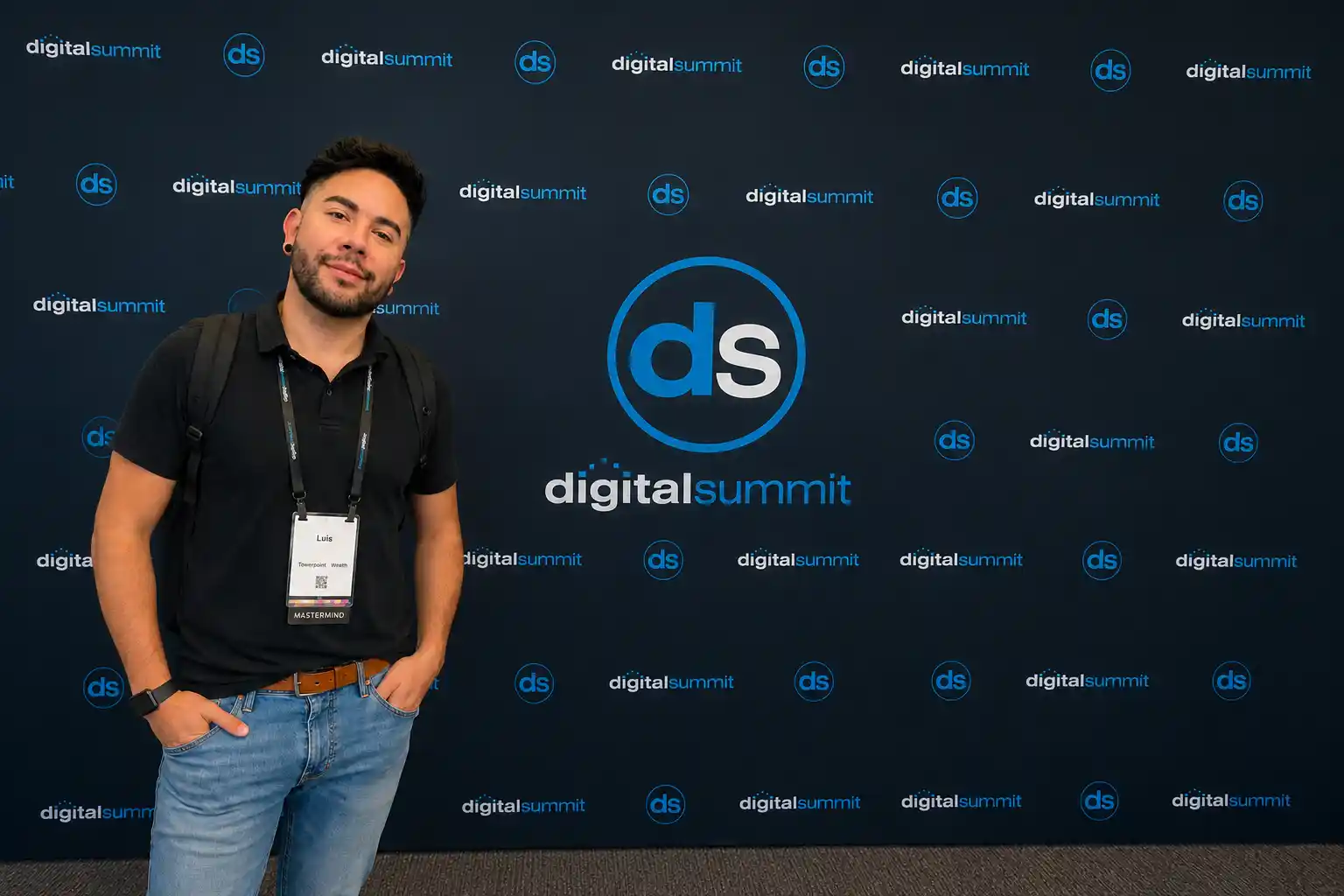
By Luis Barrera, Director of Marketing & Communications, Towerpoint Wealth
Last week, I attended Digital Summit Denver, one of the nation's premier marketing conferences, bringing together leaders from organizations such as Morning Brew, Patagonia, Seer Interactive, Nestlé, the University of Denver, and many others. Speakers including Alex Lieberman, co-founder of Morning Brew, Angela Clark, former Vice President of Digital at Patagonia, and SEO and AI experts like Wil Reynolds, Greg Gifford, and Grant Simmons shared their perspectives on where marketing is headed next.

As expected, one topic dominated nearly every conversation at Digital Summit: Artificial Intelligence.
AI is no longer a future trend—it's already transforming how businesses create content, conduct research, analyze data, communicate with customers, and make decisions. The pace of change is remarkable, and if there was one message repeated throughout the conference, it was that marketing is evolving faster than ever before.
Yet despite all the discussions about AI, automation, and emerging technology, my biggest takeaway wasn't about artificial intelligence at all.
It was about people.
In a world where technology can generate content in seconds and information is available almost instantly, the human elements of communication become even more important. Trust. Authenticity. Expertise. Relationships. Those are the qualities that continue to set businesses apart, and they were at the center of many of the most meaningful conversations I had throughout the conference.
Information Is Becoming a Commodity
For years, marketers have been in the business of distributing information. We created blogs, newsletters, videos, social media posts, guides, and presentations to educate consumers and answer questions.
Today, AI can generate much of that information instantly.
Consumers can ask ChatGPT, Gemini, Claude, or countless other AI tools almost any question and receive an answer in seconds. Information that once required extensive searching is now available on demand and, in many cases, completely free.
This creates an interesting challenge for marketers. If information becomes abundant, what becomes valuable? The answer isn't more content. The answer is better content. More importantly, it is trustworthy content.
Authenticity Is Becoming a Competitive Advantage
One of the recurring themes throughout the conference was the growing importance of authenticity. As AI tools become more powerful, businesses can now create blogs, social media posts, videos, and entire websites faster than ever before.
But speed doesn't guarantee quality, and it certainly doesn't guarantee trust.
As AI-generated content becomes more common, consumers will increasingly look for signs that information is credible, accurate, and backed by real-world experience. They'll want to know who's behind the content and whether that person truly understands the subject matter.
This is especially true in wealth management.
People don't hire a financial advisor simply because they need access to information. Financial information has never been more available. They hire an advisor because they want guidance, perspective, and confidence when making important decisions.
Whether it's preparing for retirement, selling a business, navigating the loss of a spouse, caring for aging parents, or staying disciplined during volatile markets, these are deeply personal situations that require more than information alone. They require experience, empathy, and judgment.
Technology can help organize information and make it more accessible. But wisdom comes from helping real people navigate real-life challenges.
And that's something AI can't replace.
AI Is a Tool, Not a Replacement
One of the recurring themes throughout Digital Summit was that AI should be viewed as an accelerator, not a substitute for expertise. At Towerpoint Wealth, I believe AI will become an increasingly valuable tool for research, brainstorming, workflow automation, and content development. It can help us work more efficiently, organize ideas, identify trends, and better understand the questions people are asking. Used correctly, AI has the potential to enhance productivity and improve the way organizations communicate and serve their audiences.
However, AI still requires human judgment. Someone must verify facts, provide context, and determine whether information is truly helpful and relevant. Most importantly, someone must understand the human side of communication. While AI can generate content, it cannot replace empathy, experience, or genuine relationships. Marketing isn't simply about delivering information—it's about building trust. And trust is earned through authenticity, understanding, and meaningful human connection.
Trust Will Matter More Than Ever
One of the biggest ideas discussed throughout the conference was how visibility is changing. In the past, businesses focused almost entirely on ranking higher in search engines like Google. Today, more people are asking questions directly to AI tools and receiving answers without ever clicking through multiple search results.
Because of this shift, businesses need to think beyond traditional SEO. Success will come from being seen as a trusted and credible source of information. The companies that stand out won't necessarily be the ones producing the most content—they'll be the ones producing the most valuable content. Real expertise, authentic perspectives, and genuine human connections will matter more than ever. People want information they can trust, and they want to know there's a real person behind the message.
What This Means for Towerpoint Wealth
As I returned from Denver, I found myself thinking less about artificial intelligence and more about the importance of human connection.
The relationships we build with clients, the conversations we have, and the trust we earn matter more than ever. While technology will continue to evolve and AI will undoubtedly become more powerful, the foundation of effective communication remains unchanged: people want to work with people they trust.
At Towerpoint Wealth, that means continuing to create content that is accurate, thoughtful, educational, and rooted in real-world experience. It means embracing technology as a tool while never losing sight of the human side of what we do. AI may change how information is delivered, but trust, empathy, and genuine relationships cannot be automated. In many ways, I believe those qualities will become even more valuable in the years ahead.
Technology will continue to evolve. AI will continue to advance. But trust will remain the foundation of every meaningful relationship.
And that's a future worth investing in.