


Social Security Decisions That Matter More for High-Income Retirees
If you’d like to see how these decisions fit into your broader retirement income strategy, we invite you to schedule a complimentary 20-minute “Ask Anything” conversation with our team.

Trustee Responsibilities and Duties: What Every Trustee Needs to Know
While the structure of a trust may appear simple, the role of a trustee involves substantial obligations and oversight. Understanding trustee responsibilities and duties is essential for anyone who accepts this position or is selecting the right trustee for their estate plan.

Tax Planning for High Income Earners: Strategies to Preserve and Grow Wealth
Effective tax planning for high income earners focuses on more than simply filing returns during tax season. Instead, it involves coordinated financial decisions throughout the tax year that improve tax efficiency, control taxable income, and manage future tax exposure. By understanding how different sources of income interact with the tax laws, high earners can develop tax reduction strategies that help preserve wealth and support long-term financial goals.

Retirement Planning for Late Starters: A Strategic Guide to Catching Up
Retirement planning for late starters requires a disciplined approach that focuses on accelerating savings, using tax-advantaged retirement accounts, and maximizing every opportunity available. When you begin retirement planning later than planned, it becomes important to take advantage of catch-up provisions and other planning strategies that help rebuild momentum and recover lost time

Retirement Income Planning Strategies: How to Build Reliable Income in Retirement
For many households, retirement income planning strategies involve coordinating multiple sources of income such as Social Security benefits, retirement accounts, and taxable investments. A well-structured retirement plan ensures that these income sources work together efficiently while also accounting for taxes, health care costs, and potential market volatility.

Sequence of Return Risk: Why Order Matters in Retirement
Understand sequence of return risk and why the first years of retirement matter most. Learn how market timing and withdrawal strategies interact to shape the long-term sustainability of your portfolio.

12 Important Questions to Ask a Fiduciary Advisor Before You Trust Them With Your Wealth
Choosing a financial advisor is one of the most important financial decisions a person can make. Whether you are preparing for retirement, growing your net worth, or managing complex assets, the right financial advisor can help you build a clear plan and make confident financial decisions. However, not every advisor operates under the same standards. A fiduciary advisor is legally obligated to act in the best interest of clients, which means the advice provided should prioritize the client’s financial goals instead of the advisor’s compensation or incentives.

Private Wealth Management vs Traditional Advisory: What’s the Difference?
For many people early in their financial journey, traditional advisors provide helpful investment advice and support for retirement accounts and investing decisions. However, as finances grow more complex and assets accumulate, the need for broader wealth management services often becomes more important. Wealth management firms designed for high net worth individuals and affluent clients often deliver a deeper level of planning, coordination, and expertise that goes beyond selecting investments.

Investment Management Fees Explained: What You’re Really Paying For
Every investor pays some form of investment fees whether they realize it or not. These costs can include management fees, trading fees, administrative fees, and a variety of other recurring fees tied to different investment vehicles. The key is understanding what the fees pay for and whether the value provided by a financial advisor or investment professional justifies the cost.

How Tax Planning Differs From Tax Preparation
Tax preparation focuses on accurately reporting financial activities from the previous year and submitting a tax return that complies with current tax laws. Tax planning takes a proactive approach that looks ahead, helping individuals and business owners identify opportunities to minimize tax liability and improve their financial position over time.

Standard Deduction vs. Itemizing: What High-Income Filers Should Focus on This Tax Season
The standard deduction provides a fixed dollar amount that reduces your taxable income. Itemizing, on the other hand, means listing eligible expenses individually — things like mortgage interest, certain taxes, charitable contributions, and other qualifying deductions.

How Investment Managers Rebalance Portfolios
Investing involves risk, and no investment strategy can guarantee future results, but disciplined rebalancing helps investors stay focused on long-term outcomes rather than short-term noise.

What Trump Savings Accounts Mean for Families Thinking About Longer-Term Wealth Transfer
In this article, we’ll walk through what these accounts are designed to do, how they differ from other child saving and investing options, and what families may want to consider when thinking about generational planning — without assumptions, urgency, or speculation.

How Does Working With A Fiduciary Change The Advice I Receive?
For individuals and families seeking clarity, transparency, and alignment, working with a fiduciary can materially change the experience and outcome of financial planning. Understanding this fiduciary standard helps clients make informed decisions about who they trust with their wealth, retirement planning, and long-term thinking.

How Do Trustees and Fiduciaries Manage Assets for Beneficiaries Over Time?
Trustees serve in a fiduciary capacity, meaning they are legally bound to act in the best interests of the beneficiaries at all times. Their fiduciary responsibilities include the duty of loyalty, prudence, and impartiality. The duty of loyalty requires trustees to avoid conflicts of interest and never use trust assets for personal gain. They must act in the best interest of beneficiaries and protect trust property with care.

Trustee Responsibilities and Duties: What Every Trustee Needs to Know
While the structure of a trust may appear simple, the role of a trustee involves substantial obligations and oversight. Understanding trustee responsibilities and duties is essential for anyone who accepts this position or is selecting the right trustee for their estate plan.

Tax Planning for High Income Earners: Strategies to Preserve and Grow Wealth
Effective tax planning for high income earners focuses on more than simply filing returns during tax season. Instead, it involves coordinated financial decisions throughout the tax year that improve tax efficiency, control taxable income, and manage future tax exposure. By understanding how different sources of income interact with the tax laws, high earners can develop tax reduction strategies that help preserve wealth and support long-term financial goals.

Retirement Planning for Late Starters: A Strategic Guide to Catching Up
Retirement planning for late starters requires a disciplined approach that focuses on accelerating savings, using tax-advantaged retirement accounts, and maximizing every opportunity available. When you begin retirement planning later than planned, it becomes important to take advantage of catch-up provisions and other planning strategies that help rebuild momentum and recover lost time

Retirement Income Planning Strategies: How to Build Reliable Income in Retirement
For many households, retirement income planning strategies involve coordinating multiple sources of income such as Social Security benefits, retirement accounts, and taxable investments. A well-structured retirement plan ensures that these income sources work together efficiently while also accounting for taxes, health care costs, and potential market volatility.

12 Important Questions to Ask a Fiduciary Advisor Before You Trust Them With Your Wealth
Choosing a financial advisor is one of the most important financial decisions a person can make. Whether you are preparing for retirement, growing your net worth, or managing complex assets, the right financial advisor can help you build a clear plan and make confident financial decisions. However, not every advisor operates under the same standards. A fiduciary advisor is legally obligated to act in the best interest of clients, which means the advice provided should prioritize the client’s financial goals instead of the advisor’s compensation or incentives.

Private Wealth Management vs Traditional Advisory: What’s the Difference?
For many people early in their financial journey, traditional advisors provide helpful investment advice and support for retirement accounts and investing decisions. However, as finances grow more complex and assets accumulate, the need for broader wealth management services often becomes more important. Wealth management firms designed for high net worth individuals and affluent clients often deliver a deeper level of planning, coordination, and expertise that goes beyond selecting investments.

Investment Management Fees Explained: What You’re Really Paying For
Every investor pays some form of investment fees whether they realize it or not. These costs can include management fees, trading fees, administrative fees, and a variety of other recurring fees tied to different investment vehicles. The key is understanding what the fees pay for and whether the value provided by a financial advisor or investment professional justifies the cost.

How Investment Managers Rebalance Portfolios
Investing involves risk, and no investment strategy can guarantee future results, but disciplined rebalancing helps investors stay focused on long-term outcomes rather than short-term noise.

How Does Working With A Fiduciary Change The Advice I Receive?
For individuals and families seeking clarity, transparency, and alignment, working with a fiduciary can materially change the experience and outcome of financial planning. Understanding this fiduciary standard helps clients make informed decisions about who they trust with their wealth, retirement planning, and long-term thinking.

How Do Trustees and Fiduciaries Manage Assets for Beneficiaries Over Time?
Trustees serve in a fiduciary capacity, meaning they are legally bound to act in the best interests of the beneficiaries at all times. Their fiduciary responsibilities include the duty of loyalty, prudence, and impartiality. The duty of loyalty requires trustees to avoid conflicts of interest and never use trust assets for personal gain. They must act in the best interest of beneficiaries and protect trust property with care.

Fiduciary vs. Fee-Based Financial Advisor
A fiduciary advisor is legally required to act in the best interests of clients at all times. This fiduciary duty is enforced under federal law for registered investment advisors and investment advisors who provide ongoing advisory services. The fiduciary standard requires both a duty of care and a duty of loyalty.

Estate Planning Mistakes to Avoid
The estate planning environment has shifted significantly. The federal estate tax exemption in 2025 sits at historically high levels, yet scheduled changes and legislative uncertainty, including discussion around proposals such as the big beautiful bill act and related accountability act measures, create uncertainty around future tax laws. At the federal level, changes to exemption amounts can dramatically alter estate taxes for families with large assets.

Discretionary vs Non-Discretionary Investment Management
Discretionary investment management is a structure in which a client grants written authorization allowing a financial advisor or discretionary manager to execute trades and make investment decisions without seeking client approval for each given trade. A discretionary investment account operates under a written mandate that defines the parameters of the relationship.

What’s the Difference Between Executor and Trustee?
An executor, sometimes called a personal representative, is the individual appointed in a will to administer a deceased person’s estate. The executor’s role begins after a person’s death and only becomes active once formally approved by the probate court.

Active vs. Passive Investment Management
Active investment management involves a hands on approach where investment managers attempt to beat the market by selecting individual securities, adjusting allocations, and responding to market trends. Active managers seek to generate excess returns relative to a market index through research, analysis, and tactical positioning.

Winter 2026: Insights for Professional Fiduciaries Navigating an Evolving Planning Landscape
Recent federal and California-specific changes will meaningfully affect retirement funding, tax strategy, and compliance. In this article, are the key developments professional fiduciaries should have on their radar.

How Do I Know If I Need a Fiduciary Financial Advisor or a Traditional Advisor?
A financial advisor can act as a trusted partner, but the title alone does not guarantee that your interests come first. Some financial professionals are legally required to act in your best interest while others are not.

How Can I Feel Truly Financially Secure? A Holistic Guide to Financial Peace of Mind
One of the most practical ways to achieve financial stability is to build an emergency fund. This fund serves as a safety net when life throws you a curveball. Whether it’s a medical bill, a car breaks down unexpectedly, or a job layoff, emergency savings ensure you’re financially prepared. A good starter emergency fund should cover at least three to six months of living expenses. Ideally, these funds should be kept in a separate savings account to remain accessible and untouched.

What Is a Fiduciary Financial Advisor? Why It Matters More Than Ever in 2025
A fiduciary financial advisor is a professional who is legally obligated to act in the best interests of their clients.

Fall 2025: Fiduciary Insights on the One Big Beautiful Bill & Client Protection Strategies
Welcome to the Fall 2025 edition of Towerpoint Wealth’s Fiduciary Group Newsletter, Fiduciary Focus! We hope you find this newsletter both informative and empowering as you continue to uphold the highest standards of fiduciary care.

Summer 2025: Navigating Volatility with Strategy and Stability
As we enter the second half of the year, this edition focuses on timely developments—including the market reaction to new tariffs, core principles of tax-efficient investing, and insights to support you in managing complexity with confidence.

The Secure Act Impact on Inherited IRAs: 5 Things Every Fiduciary Must Know
Welcome to our 2025 edition of Fiduciary Focus! In this issue, we’re going to dive into the new Inherited IRA & Required Minimum Distribution (RMD) rules under SECURE Act 2.0 and their implications for fiduciaries managing trusts.

The Fiduciary’s Role in Real Estate: Calculating ROI for Smarter Investments
Welcome to the Fall edition of Towerpoint Wealth’s Fiduciary Group’s Newsletter – Fiduciary Focus! As fiduciaries, we recognize the importance of safeguarding our clients’ assets. Our goal is to equip

Considering the Effects of Inflation and Deflation 08.02.2024
Welcome to the second edition of Towerpoint Wealth’s Fiduciary Group’s Newsletter – Fiduciary Focus! As we are also held to a fiduciary standard, we understand the weight of our

Your Essential Newsletter for Trust Administration and More 04.10.2024
Introducing Fiduciary Focus, Towerpoint Wealth’s new newsletter for the fiduciary community. Welcome to the first edition of Towerpoint Wealth’s Fiduciary Group’s Newsletter – Fiduciary Focus. Our growing team is excited to

6 Smart Tax Moves To Make Before Filing Your Taxes
Our latest episode “6 Smart Tax Moves To Make Before Filing Your Taxes” is designed to help you take charge of your financial future this tax season. In this episode, host Joseph Eschleman, CIMA®, President of Towerpoint Wealth,

Stewards of Integrity: The Vital Role of Private Professional Fiduciaries
In this episode of A Wealth of Knowledge, we shine a spotlight on the vital and multifaceted role of private professional fiduciaries. Hosted by Joseph Eschleman, President of Towerpoint Wealth, this episode features

Navigating the 2024 Tax Season: Your Top 6 Questions, Answered! Season 2, Episode 1
Welcome to the Season 2 premiere of “A Wealth of Knowledge,” where we’re plunging into the depths of wealth management to equip you with indispensable guidance and expertise for safeguarding

Why T-Bills May Be Better than CDs! Season 1, Episode 5
Dive Deeper: Treasury Bills vs. Certificates of Deposit in an all new episode of @twrpointwealth “A Wealth of Knowledge” Podcast – Join President Joseph and special guest advisor @jlattt in this episode as they
Reducing the Necessary Evils of Investing: Expenses and Taxes Season 1, Episode 4
In this episode, our President, Joseph Eschleman, CIMA®, and our Director of Tax and Financial Planning, Steve Pitchford, CPA, CFP®, as they unravel the complexities of managing and reducing the “necessary evils” of

9 Tax Strategies Real Estate Investors Wish They Had Known Season 1, Episode 3
In this episode Megan Miller and Joseoh Eschleman talk about the 9 tax strategies real estate investors must know. As Towerpoint Wealth’s President and founder, Joseph provides customized financial planning

Real estate market in Sacramento Season 1, Episode 2
My what a difference 18 months makes! Do you own real estate in the greater Sacramento area? Recently bought a home here? Or, just thinking about buying or selling real

Economy in Recession? Season 1, Episode 1
Economy in Recession? Five specific strategies to help you recession-proof your portfolio LISTEN NOW! Economy in Recession? | Five specific strategies to help you recession proof your portfolio Is the

How Do I Protect My Money From Inflation? Proven Strategies for Preserving Wealth
In this guide we explore the most effective, research‑backed ways to preserve value, outpace inflation, and build a resilient, diversified investment portfolio tailored to long-term goals.

Am I On Track for Retirement? A High-Net-Worth Guide to Financial Readiness
Being on track for retirement means having the financial stability to maintain your lifestyle after you stop working. It involves aligning your retirement budget with your retirement income and managing your investments, taxes, and expenses with discipline and foresight.

6 Smart Tax Moves to Make Before Filing Your Taxes
Tax season is fast approaching, and if you’re aiming to reduce your obligation to Uncle Sam in 2025, now is the time to get informed and take action. In our latest A Wealth of Knowledge podcast, we explore “6 Smart Tax Moves to Make Before Filing Your Taxes.”

What Is Happening With The Social Security Fairness Act?
The Social Security Fairness Act (SSFA) was signed into law by President Biden on January 5, 2025. This eliminates the “Windfall Elimination Provision” (WEP) and the “Government Pension Offset” (GPO)

Building Bright Futures: Top 4 College Savings Plans to Consider
Planning for your child’s college education can feel overwhelming—but it doesn’t have to be! With tuition costs climbing every year, and limited access to financial aid, having a solid savings

Our Latest Podcast Episode – Exploring the World of Private Professional Fiduciaries
In our latest episode of “A Wealth of Knowledge”, Towerpoint Wealth’s original podcast, we dive into the intricate world of private professional fiduciaries. These trusted professionals play a critical part
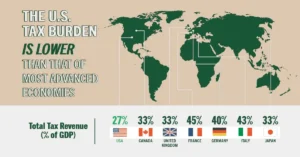
How Does the U.S. Tax Burden Stack Up? 06.27.2024
The comparative tax burdens between the United States and several other advanced economies. The central message highlights that the U.S. has a significantly lower tax burden, with total tax revenue

Maximize stock compensation and RSU selling strategy video 06.07.2024
Compensation packages for directors, VPs, software engineers, or other employees of technology based firms almost always contain restricted stock units, or RSUs. If you own RSUs, you may be asking

Will you have enough money to retire? 05.03.2024
4 Reasons You Might Fall Short of Your Retirement Plan When you find yourself daydreaming about retirement, does your dream retirement entail traveling the world? Dedicating time to beloved hobbies?

20 Common Investing Mistakes 12.06.2023
Understanding that the world of investing and wealth-building is filled with opportunity, not only for growth but also for errors, at Towerpoint Wealth we believe our role is to raise

Money in T-Bills or CDs | Which is better: T-Bills or CDs? 10.19.2023
Compare Treasury bill —T-bill— rates with bank CD best rates. T-bill rates today are often as competitive, and oftentimes more competitive, than the interest rates offered on CDs. But this

FIRE Investing for Financial Independence! 08.21.2023
Empower yourself with this strategy for financial independence, early retirement, and peace of mind. More than a hot trend, FIRE investing principles have been guiding wealthy, independent people towards financial independence

Is $2 Million Enough to Retire 06.04.2023
A 2020 survey from Schwab Retirement Plan Services found that the average worker expects to need roughly $1.9 million to retire comfortably. Is $2 million enough to retire? Is retiring with 2 million

Six Questions to Ask When Hiring a Financial Advisor 05.05.2023
Are you on the hunt for a high-quality financial advisor? There are (literally) thousands of people who hold themselves out as financial advisors just in California alone! How can you

West Sacramento Real Estate Investment Meet Up 04.15.2023
Most investors know, exposure to real estate in a financial portfolio provides opportunities to grow net worth. In America, there are basically two tax systems: one for those in the

Maximizing Your ROI: A Guide for Real Estate Investors 08.14.2024
Real estate ROI, or return on investment, measures the profit earned on a real estate investment after all costs of the investment are deducted. Your real estate ROI is a

Is Crypto Worth Investing In? 05.23.2023
Did you see Joseph Eschleman, CIMA® on ABC10 last night??!! ???? Lora Painter interviewed our President about “The Truth about Crypto” and how it can be considered as a potentially complementary part of a #properlydiversified investment portfolio.

Do you need to pay taxes on money given to you in a will? 03.20.2023
Towerpoint Wealth’s President, Joseph Eschleman, was the go-to financial expert on ABC10 News’ March 20 feature story. A guest on ABC10’s Dollars and Sense segment, Joseph explained the four different taxes people need to be

President Joseph Eschleman Discusses the 2022 Midterm Elections on ABC10 11.8.2022
Connecting with ABC10 evening anchor Lora Painter for a productive interview ahead of the 2022 midterm elections, Joseph weighed in last night with some key points and considerations, specifically touching

Towerpoint Wealth’s President featured on ABC10 10.13.2022
Our President, Joseph Eschleman, was featured last night in evening anchor Lora Painter’s story on ABC10’s 11 p.m. news! Joe discussed with Lora the *big* announcement made yesterday by the

Towerpoint Wealth’s President Featured in the Sacramento Bee 06.29.2022
Our President, Joseph Eschleman dove into a number of specific opportunities and valuable money-saving tips to navigate today’s inflationary environment with Sacramento Bee reporter Hanh Truong, in her recent article: “Should You Keep Cash On

Towerpoint Wealth’s President featured in Investor’s Business Daily 06.24.2022
In an unsettled world where stock prices are declining and uncertainty is rising, many fear an economy in recession here in the United States. While recession is by no means
Leading by Example with Joe Eschleman – LifeBlood Podcast 04.18.2022
Described as “a human wellbeing and flourishing podcast,” LifeBlood is released daily and features a myriad of different professionals and subject matter experts. Produced and hosted from Scottsdale, AZ by George Grombacher, our
President Joseph Eschleman Featured in Financial Advisor IQ Magazine 02.25.2022
Our President, Joseph F. Eschleman, CIMA®, was recently profiled in Financial Advisor IQ’s February 25 article discussing what clients need to know about Russia’s invasion of Ukraine, the impact these developments may have

Joseph Eschleman, CIMA®Heart 2 Biz Podcast 09.23.2021
Our President, Joseph Eschleman, was the featured guest on Laurel Sagen and Shasta Escalante’s Heart 2 Biz podcast earlier this month. Heart 2 Biz is a weekly podcast focused on

Five Things I Wish Someone Told Me Before I Became A Founder 02.12.2021
Our President, Joseph F. Eschleman, CIMA®, was interviewed by Candice Georgiadis, a contributing writer to Authority Magazine, as part of her series about leadership lessons of accomplished business leaders. Joseph’s

President Joseph Eschleman Cited As Expert
Our President, Joseph Eschleman, recently penned a white paper for Towerpoint Wealth that discussed 14 different strategies to consider during the coronavirus crisis. Joseph was cited as an expert by MutualFunds.com for his work
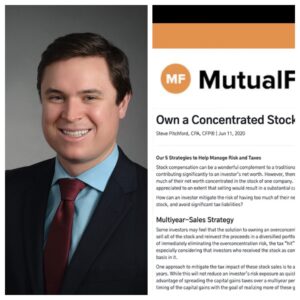
Steve Pitchford Cited As Expert, Published on MutualFunds.com
Our Director of Tax and Financial Planning, Steve Pitchford, recently penned a white paper for Towerpoint Wealth that focuses on strategies to manage the risk and income tax consequences of owing

President Joseph Eschleman Interviewed by Diamond Consultants
The ability to freely and creatively communicate with clients has proven to be critical during the COVID-19 crisis. And it is this freedom that served as one of the primary

President Jospeh Eschleman Featured in AdvisorHub
Towerpoint Wealth’s President, Joseph Eschleman, was featured in AdvisorHub on Tuesday in an article penned by AdvisorHub’s publisher and CEO, Tony Sirianni. Tony has been asking top advisors from leading wealth management firms their opinions

Did Biden Sign the Social Security Fairness Act? What It Means for Public Employees and Retirees in 2025
The Social Security Fairness Act (H.R. 82) was enacted into law on January 5, 2025 when President Joe Biden signed the Fairness Act into law at the White House. That answered the question, “did Biden sign the Social Security Fairness Act,” with a resounding yes.

Health Care & Your Retirement: Key Takeaways from Our Live Webinar
During this comprehensive workshop, we tackled the most pressing concerns about health care both before and during retirement, providing expert guidance to help you make informed decisions. Here’s a breakdown of what was discussed:

TPW Getting Our Learn On!
Earlier this week we hosted a continuing education event for our Wealth Advisors focused on reverse mortgages. Featuring Scott Roseveare, President and Founder of Live Better Financial, the session explored key

Exploring the Future of Wealth at FutureProof Festival 09.16.2024
Our Partner, Wealth Advisor, Jonathan LaTurner, and Director of Research and Operations, Nathan Billigmeier, are attending FutureProof, the world’s largest wealth management “festival,” in Huntington Beach, where they are already immersed

Shriners Children’s Northern California Community Day 06.21.2024
Sweet moments and even sweeter smiles! Our Towerpoint Wealth team enjoyed a fulfilling Community Day at Shriners Children’s Northern California yesterday afternoon. We hosted a 90 minute ice cream/arts and crafts social, helping

Front Street Animal Shelter Community Day 12.19.2023
Last week, the Towerpoint Wealth team carved out a full morning to dedicate some time (and a little grit and elbow grease) to support the Front Street Animal Shelter’s Pet Food Pantry program.


Building the Future at TPW! 11.15.2023
Earlier this week, our President, Joseph Eschleman, and Partner, Jonathan LaTurner (seen above, waving!) explored the perfect furnishings for our new office space, set to elevate our new workspace in

Luis Barrera Attends the 2023 Digital Summit in San Diego 10.27.2023
Our Marketing Specialist, Luis Barrera is taking San Diego by storm at the Digital Summit. We are happy to support Luis’ journey of learning new marketing skills, expanding his marketing

TPW Webinar: AI Decoded: Unlocking the Secrets of Artificial Intelligence! 11.06.2023
Everyone is talking about Artificial Intelligence (AI). What is the AI question top of your mind? In today’s rapidly evolving tech landscape, the AI user experience affects everything we do.

The Peace of Mind of Being a Towerpoint Wealth Client – Our Partnership with Charles Schwab 08.07.2023
Our President, Joseph Eschleman, and Partner, Wealth Advisor, Jonathan LaTurner, enjoyed connecting with Anne Stauffer, TPW’s Schwab Advisor Services relationship manager, for an enjoyable lunch yesterday to discuss our strategic custodial

TPW Spring Social Mixer 05.07.2023
A fun and prominent group of Sacramento-area financial advisors, professional fiduciaries, CPAs, EAs, mortgage brokers, wealth managers, bankers, and attorneys gathered for Towerpoint Wealth’s 1st annual TPW Spring Social Mixer.

Tax Relief for Californians Impacted by Winter Storms 1.20.2023
Californians impacted by this year’s winter storms are now eligible to claim a deduction for a disaster loss and will have more time to file their taxes. Resources include: Call us (916-405-9140)

Megan Keeping Her Professional Saw Sharp! 1.11.2023
Our new Associate Wealth Advisor, Megan Miller, EA, has not wasted any time diving into coordinating the myriad of professional responsibilities that goes with the territory, most recently attending First

Michelle Hard at Work 12.10.2022
Our wonderful Client Service Specialist, Michelle Venezia, took time out of her schedule on Monday morning to do an on-site document notarization for two very good Towerpoint Wealth clients, Jeff and

Social Security Decisions That Matter More for High-Income Retirees
If you’d like to see how these decisions fit into your broader retirement income strategy, we invite you to schedule a complimentary 20-minute “Ask Anything” conversation with our team.

Sequence of Return Risk: Why Order Matters in Retirement
Understand sequence of return risk and why the first years of retirement matter most. Learn how market timing and withdrawal strategies interact to shape the long-term sustainability of your portfolio.

Standard Deduction vs. Itemizing: What High-Income Filers Should Focus on This Tax Season
The standard deduction provides a fixed dollar amount that reduces your taxable income. Itemizing, on the other hand, means listing eligible expenses individually — things like mortgage interest, certain taxes, charitable contributions, and other qualifying deductions.

What Trump Savings Accounts Mean for Families Thinking About Longer-Term Wealth Transfer
In this article, we’ll walk through what these accounts are designed to do, how they differ from other child saving and investing options, and what families may want to consider when thinking about generational planning — without assumptions, urgency, or speculation.

Tax Planning in Retirement: What You Should Review Before Filing
At Towerpoint Wealth, we’re sharing our perspective on retirement tax planning, how retirement income is taxed, why the structure of that income matters, and why reviewing these decisions early can help preserve flexibility over time.

Supporting Adult Children Without Undermining Your Own Financial Goals
For many families, providing financial help to adult children begins with the best of intentions. It starts as a temporary bridge. A moment of support during a transition. A way to help them get on their feet. Over time, though, what starts as shorter-term assistance can quietly become an ongoing commitment — often without a clear plan, timeline, or shared expectations.

2026 Market Outlook: What We Know, What We Don’t, and Why Planning Matters More Than Prediction
As we head into 2026, it’s natural for investors to ask a familiar question: What does the market outlook look like from here? After several years of rapid shifts, elevated

What High-Confidence Investors Do Every January: January Financial Resolutions
The new year isn’t about reinventing their entire financial life. It’s often simply about re-centering it. Rather than creating quick goals based on headlines or emotion, they use January as a moment to step back, reconnect with their longer-term plan, and reinforce the structures that support lasting financial confidence.

Second Homes and a Softening Housing Market: What Affluent Buyers Need to Know in 2026
For the past several years, even higher-income households have found themselves asking a question they may not have expected a decade ago: “Will I ever be able to buy a

Charitable Giving: How to Make the Most Tax Impact This Holiday Season
In this Thanksgiving edition of Trending Today, we’ll walk through a number of charitable giving strategies that can help you make a bigger impact, potentially reduce your tax bill, and integrate generosity AND tax efficiency into your broader financial and retirement plan.

Time, Not Timing: Why Longer-Term Investing Wins
Many investors dream of perfect timing — buying right before the market soars, and selling just before it dips. However, oftentimes, investors do the opposite. In theory, market timing is

The Hidden Cost of Holding Too Much Cash: How Cash Drag Can Erode Your Wealth
In this article, we’ll discuss the hidden costs of holding cash, why excess liquidity often works against you, and how a thoughtful cash flow management strategy can strike the right balance between peace of mind and portfolio growth.

A Financial FESTIVAL? Future Proof 2025 Takeaways for Advisors and Investors
Every year, thousands of financial professionals gather at what has quickly become one of the most talked-about events in wealth management: the Future Proof Festival in Huntington Beach, CA. And

What Changes Are Coming to Social Security in 2025: What You Need to Know
In this article we explain the most important updates, what to watch, and how to adjust your planning.

The One Big Beautiful Bill Act (OBBBA): What Investors Need to Know
As we’re sure you’ve heard, in July 2025, Congress passed what’s being called the One Big Beautiful Bill Act — or OBBBA for short. At nearly 1,000 pages, this legislation